Quick Answer
Balayage hair color is a hand-painted or softly placed highlighting technique that creates brightness through the mid-lengths and ends while keeping the root area more natural. The most flattering version depends on your undertone, natural hair depth, haircut, and how much maintenance you want. Brunettes often do well with caramel, beige brown, honey brunette, or mushroom brown balayage. Blondes may prefer beige, champagne, pearl, or soft golden ribbons. Copper balayage can be beautiful on warm undertones, but it needs more color care.
Key Takeaways
- Balayage works best when tone and placement are planned together.
- A soft root makes the grow-out easier, but toner and gloss appointments still matter.
- Warm, cool, and neutral undertones need different balayage shades.
- Face-framing brightness can change the whole result, even when the rest of the color is subtle.
- If you are unsure about undertone, use the free BeautySpire analysis tool before choosing reference photos.
Balayage is popular because it can look dimensional without the hard root line many people associate with traditional highlights. The goal is not simply to make hair lighter. A good balayage plan decides where brightness should sit, how warm or cool the reflect should be, and how the color will grow out after the salon finish fades.
Start with the bigger hair color strategy first. The pillar guide, Hair Color Chart: How to Choose Your Most Flattering Shade, explains warm, cool, and neutral color families. This supporting guide applies that same logic specifically to balayage placement, salon planning, and maintenance.
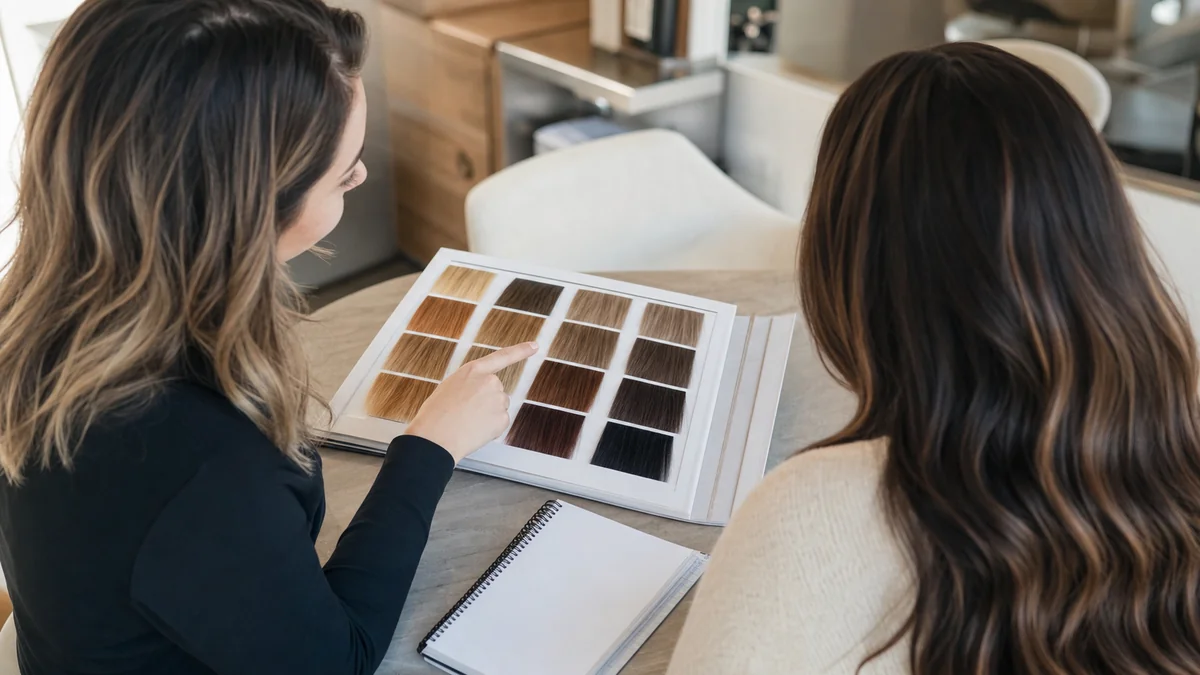
What is balayage hair color?
Balayage is a customized lightening approach where brightness is painted, swept, or softly placed to create a natural gradient. In many salons, the final look may combine open-air painting, foils, root shadow, gloss, and toning. The name matters less than the result: soft dimension, believable brightness, and a grow-out that does not look harsh after a few weeks.
Balayage is especially useful when you want movement through brunette or blonde hair without becoming a single flat color. It can also make layers, waves, and face-framing pieces stand out. The technique is flexible, but that flexibility is exactly why a clear plan matters.
How to choose your balayage tone
Choose tone before you choose placement. Warm undertones usually look good with caramel, honey, golden brunette, and soft copper balayage. Cool undertones often suit mushroom brown, beige blonde, cool brunette, or smoky bronde. Neutral undertones can usually wear balanced beige, chocolate, neutral bronde, or muted copper.
Your natural depth decides how far the color needs to lift. A dark brunette who wants pale blonde ribbons may need multiple sessions. A medium brunette who wants caramel dimension may get a flattering result more easily. If your hair has old dark dye, boxed color, or previous bleach, your colorist may need a slower plan.
| Balayage Tone | Best For | Undertone Fit | Maintenance | Salon Difficulty |
|---|---|---|---|---|
| Caramel balayage | Soft brunette brightness | Warm, neutral | Medium | Medium |
| Beige blonde balayage | Balanced blonde dimension | Neutral, soft cool | Medium to high | Medium |
| Mushroom brown balayage | Cool brunette softness | Cool, neutral | Medium | Medium |
| Copper balayage | Warm statement color | Warm | High | Advanced |
| Honey bronde balayage | Sunlit but wearable brightness | Warm, neutral | Medium | Medium |
Balayage placement options
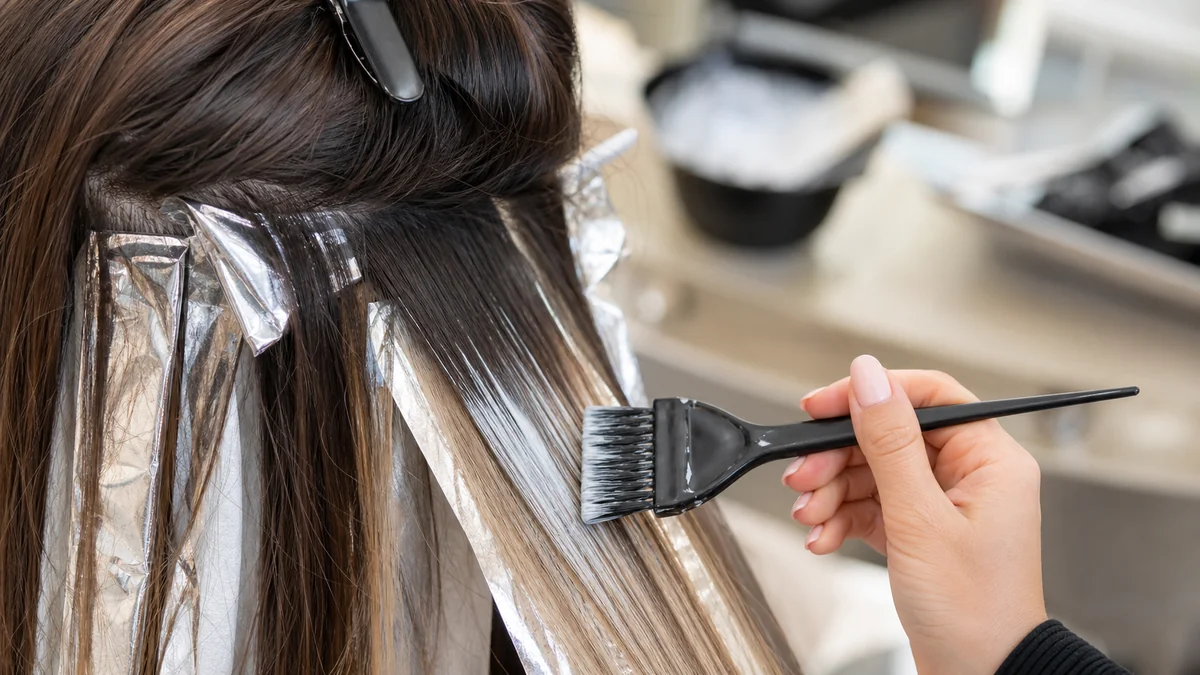
Placement controls whether balayage looks subtle, bright, bold, or low-maintenance. Face-framing pieces make the result feel lighter from the front. Mid-length ribbons add movement through waves. Bright ends create a sun-kissed effect, while a root shadow keeps the grow-out softer.
If you wear your hair straight most days, ask for softer, blended ribbons so the color does not look striped. If you wear waves or layers, more visible ribbons can look intentional because texture separates the color. Shorter hair needs careful placement because there is less length for a gradient.
Decision Box: Which balayage should you choose?
- If you want low maintenance: choose soft brunette balayage with a root shadow and subtle ends.
- If you want face-framing brightness: choose a money-piece effect, but keep it blended around the hairline.
- If you want a cooler finish: choose mushroom brown or beige blonde balayage and plan for toner.
- If you want warmth: choose caramel, honey, or copper balayage, and protect it from fading.
- If you are unsure: start softer; you can add brighter ribbons later.
Balayage comparison table
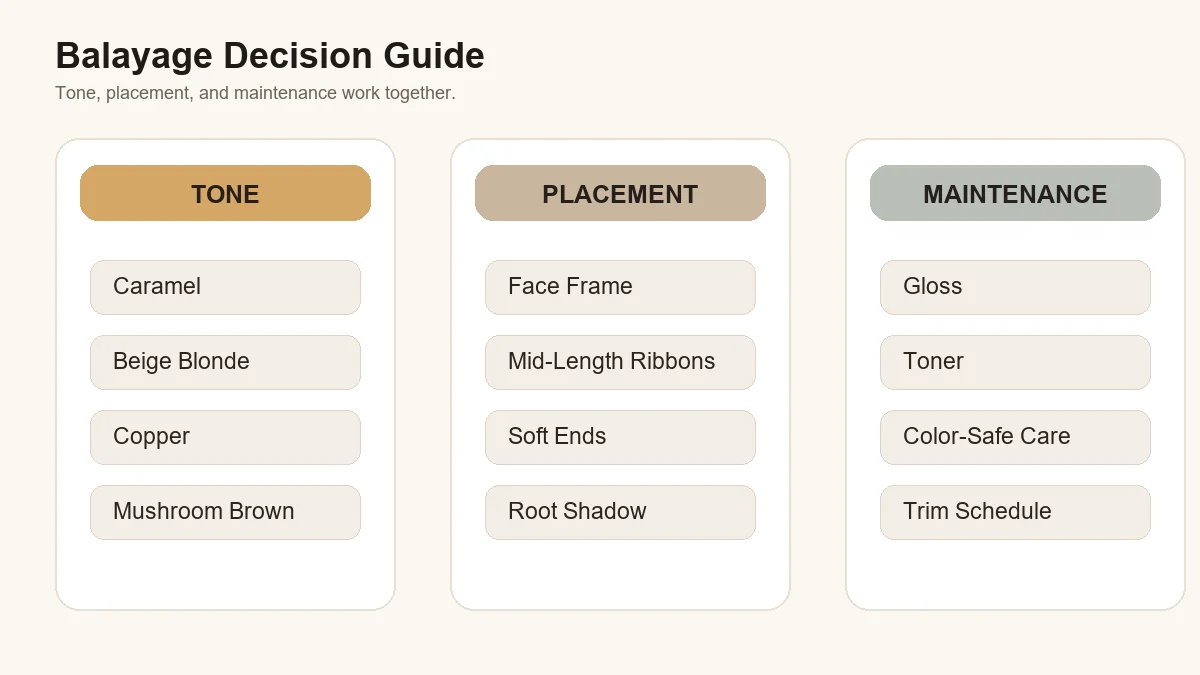
Balayage is not one look. Use this comparison to decide whether you want softness, brightness, contrast, or color impact.
| Option | Visual Effect | Best For | Upkeep | Watch Out For |
|---|---|---|---|---|
| Soft brunette balayage | Quiet dimension | First-time color or low-maintenance routines | Low to medium | Can look too subtle if the ends are very dark |
| Caramel face-frame | Brightness near the face | Warm brunettes who want visible change | Medium | Can turn orange without glossing |
| Beige blonde ribbons | Polished neutral brightness | Neutral or cool undertones | Medium to high | Can look dull if over-toned |
| Copper balayage | Warm statement color | Warm undertones and natural red warmth | High | Fades faster than brunette shades |
| High-contrast balayage | Bold dimension | People who style regularly | High | Can look harsh if the root blend is weak |
Example Scenario
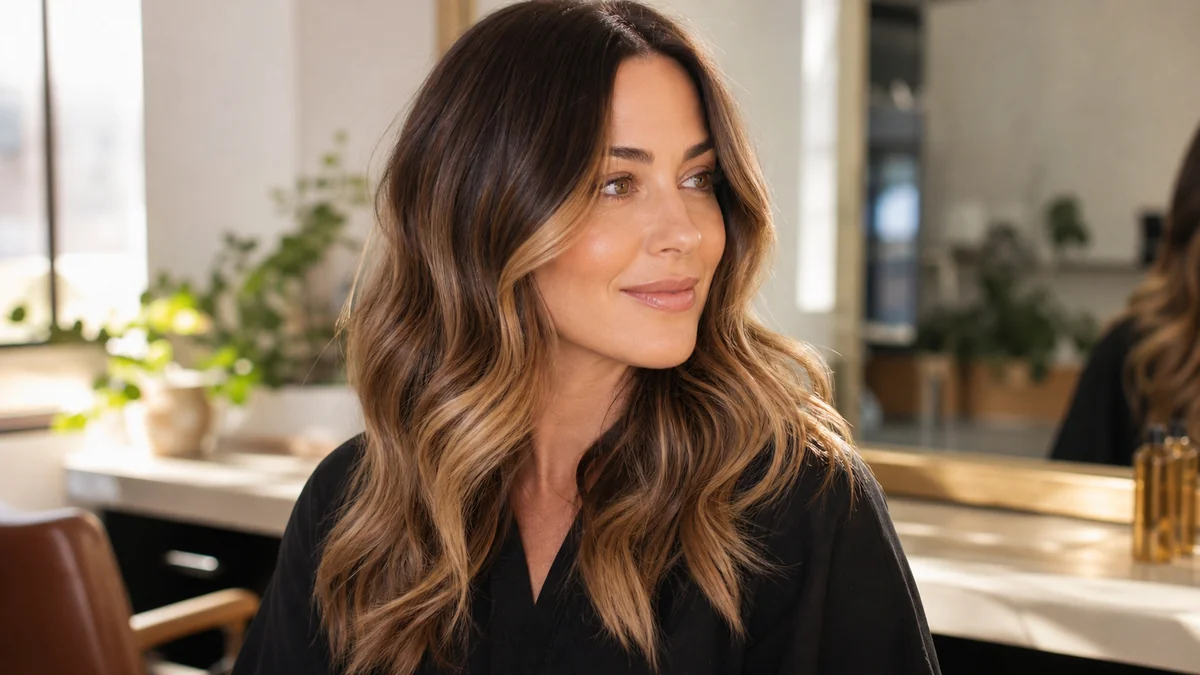
Imagine a medium brunette with warm-neutral undertones who wants visible brightness but only wants salon appointments every three months. A full pale blonde balayage would be possible, but it may require more toning and a bigger lift. A better first move is caramel brunette balayage with soft face-framing pieces and a warm gloss. The result still feels brighter from the front, but the root stays forgiving and the overall color remains connected to the natural base.
Now compare that with a cool brunette whose hair turns orange easily. For that person, mushroom brown balayage or beige brunette ribbons may look more expensive than caramel. The lift may still reveal warmth, so toner and gloss become part of the plan from the beginning.
Maintenance advice for balayage
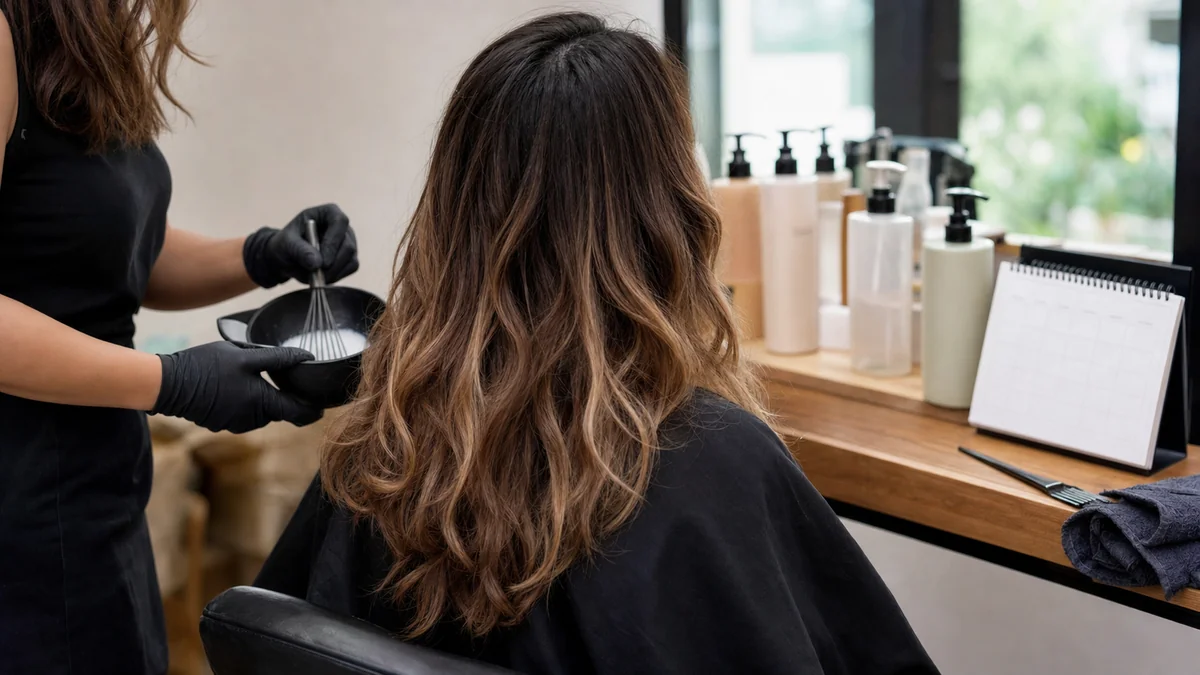
Balayage can be lower maintenance than traditional highlights, but it is not maintenance-free. Lightened pieces can turn warm, blonde ends can become dull, and copper tones can fade quickly. A gloss appointment every 6 to 10 weeks can keep the reflect fresh, while a larger balayage refresh may happen every 12 to 20 weeks depending on contrast.
At home, use color-safe shampoo, limit high heat, and protect hair from sun and chlorine. Purple shampoo can help blonde pieces, but overuse may make beige or caramel hair look smoky. Blue shampoo may help orange-prone brunette balayage, but it should not replace salon toning.
Before Your Balayage Appointment
A strong balayage result starts before the color brush touches your hair. Your colorist needs to know your natural color, previous dye history, heat styling habits, and how often you are willing to come back for gloss or toner. This is especially important if your hair has box dye, old dark color, previous bleach, keratin treatments, or fragile ends. Those details change how much lift is realistic in one appointment.
Save references with similar starting hair color, not only the finished shade you like. A caramel balayage on naturally light brown hair is a different project from caramel balayage on dyed black hair. If the reference has soft brightness around the face, ask whether that placement will suit your haircut, part, and daily styling routine. If the photo has very pale ends, ask how many sessions are needed to get there without sacrificing shine.
It also helps to decide your maximum maintenance level. Some readers want a lived-in result that can grow for months. Others want salon-polished brightness that looks fresh in photos every week. Neither goal is wrong, but they require different formulas, toner schedules, and home care.
Balayage vs Highlights vs Ombre
Balayage, highlights, and ombre can overlap visually, but they solve different style problems. Balayage is usually chosen for softness and customized placement. Traditional highlights are usually chosen for more even brightness from root to end. Ombre is usually darker at the roots and much lighter at the ends, with a stronger gradient.
| Technique | Best For | Root Look | Typical Finish | Maintenance |
|---|---|---|---|---|
| Balayage | Soft dimension and lived-in brightness | Natural or shadowed | Custom ribbons and brighter ends | Low to medium |
| Highlights | Consistent brightness and more lift | More visible grow-out | Even blonde or brunette brightness | Medium to high |
| Ombre | High contrast from dark roots to light ends | Dark and intentional | Stronger gradient | Medium |
If you want a soft, expensive-looking grow-out, balayage is often the easiest place to start. If you want to feel much blonder all over, highlights may be more direct. If you want dramatic dark-to-light contrast, ombre may be closer to the result you have in mind.
How to Talk to Your Colorist
Use specific language instead of asking for a trend name alone. Say whether you want brightness around the face, soft ribbons through the mids, lighter ends, a root shadow, or a very natural grow-out. Mention whether you usually wear your hair straight, wavy, curled, or pulled back. Balayage placement that looks beautiful in waves may look too chunky on straight hair if it is not blended carefully.
A useful salon conversation might sound like this: “I want warm-neutral brunette balayage with caramel brightness around the face, but I do not want orange ends or a harsh money piece. I can come back for gloss every eight weeks, but I do not want root touch-ups every month.” That gives your colorist tone, placement, maintenance, and boundaries.
Ask what the color will look like after ten washes. Ask what parts will fade warm. Ask whether the result requires purple shampoo, blue shampoo, gloss, or a bond-building treatment. These questions turn balayage from a pretty photo into a realistic plan.
Common Mistakes
- Choosing brightness before tone: A lighter result is not always more flattering.
- Ignoring hair history: Old dark dye, previous bleach, or fragile ends can change what is realistic.
- Using one reference photo: Bring a tone reference, a placement reference, and a photo you do not want.
- Making the face frame too harsh: Bright pieces near the face need softness to look expensive.
- Skipping gloss appointments: Balayage often looks best when the tone is refreshed before the lightened pieces look brassy.
Related Guides
- Hair Color Chart: How to Choose Your Most Flattering Shade
- Free BeautySpire analysis tool
- Best hairstyles for oval faces
- Best hairstyles for square faces
FAQ
Is balayage hair color low maintenance?
Balayage can be lower maintenance than traditional highlights because the root area is softer, but tone refreshes and gloss appointments may still be needed.
What is the best balayage color for brunettes?
Caramel, beige brown, honey brunette, and mushroom brown balayage are common brunette options. The best choice depends on undertone and maintenance.
Can balayage work on short hair?
Yes, but placement must be more precise on shorter cuts because there is less length for a soft gradient.
How often should balayage be refreshed?
Many people refresh balayage every 8 to 16 weeks depending on contrast, toner fade, and how polished they want the color to look.
Does balayage damage hair?
Balayage uses lightener, so it can cause damage if pushed too far. A conservative lift, bond support, and aftercare reduce risk.
What should I ask my colorist before balayage?
Ask about tone, placement, grow-out, number of sessions, home care, and how the color will look in your usual hairstyle.
Is balayage better than highlights?
Balayage is usually softer and more lived-in, while highlights can be brighter and more uniform. The better option depends on the look you want.
Can I choose balayage by undertone?
Yes. Warm undertones often suit caramel, honey, and copper; cool undertones often suit mushroom brown, beige blonde, and cool brunette.
Try the BeautySpire Tool
Not sure whether your undertone is warm, cool, or neutral? Try the free BeautySpire analysis tool, then use your result to choose a balayage tone that fits your coloring.