Quick Answer
A useful hair color chart starts with your undertone, your natural hair depth, and the amount of maintenance you can realistically keep. Warm undertones usually glow in golden brown, caramel, honey blonde, copper, and warm auburn. Cool undertones are often flattered by ash brown, mushroom brown, beige blonde, cool espresso, and burgundy. Neutral undertones can usually wear balanced shades such as chocolate brown, neutral bronde, soft black, muted copper, and neutral blonde.
Key Takeaways
- Hair color sits directly beside the face, so undertone can make skin look brighter, duller, warmer, or more shadowed.
- Depth matters as much as tone. A flattering shade should not be so light or so dark that it overwhelms your natural contrast.
- Warm shades add golden, amber, copper, or red-orange reflection; cool shades add ash, violet, blue, or smoky reflection.
- Maintenance should shape the decision before the appointment, especially for blonde, vivid red, silver, or high-contrast highlights.
- If you are unsure about your undertone, use the free BeautySpire analysis tool first; it gives an undertone result you can use with this chart.
Choosing hair color is easier when you stop treating every inspiration photo as a universal formula. The same caramel balayage can look rich on one person and too orange on another. The same ash brunette can look polished on cool skin and flat on warmer skin. A hair color chart helps because it turns the decision into a sequence: undertone, shade family, depth, maintenance, then placement.
This guide is meant for salon planning, not rigid rules. Use it to narrow your options before your appointment, then let your colorist adjust the formula for your current color, gray percentage, porosity, and previous dye history.
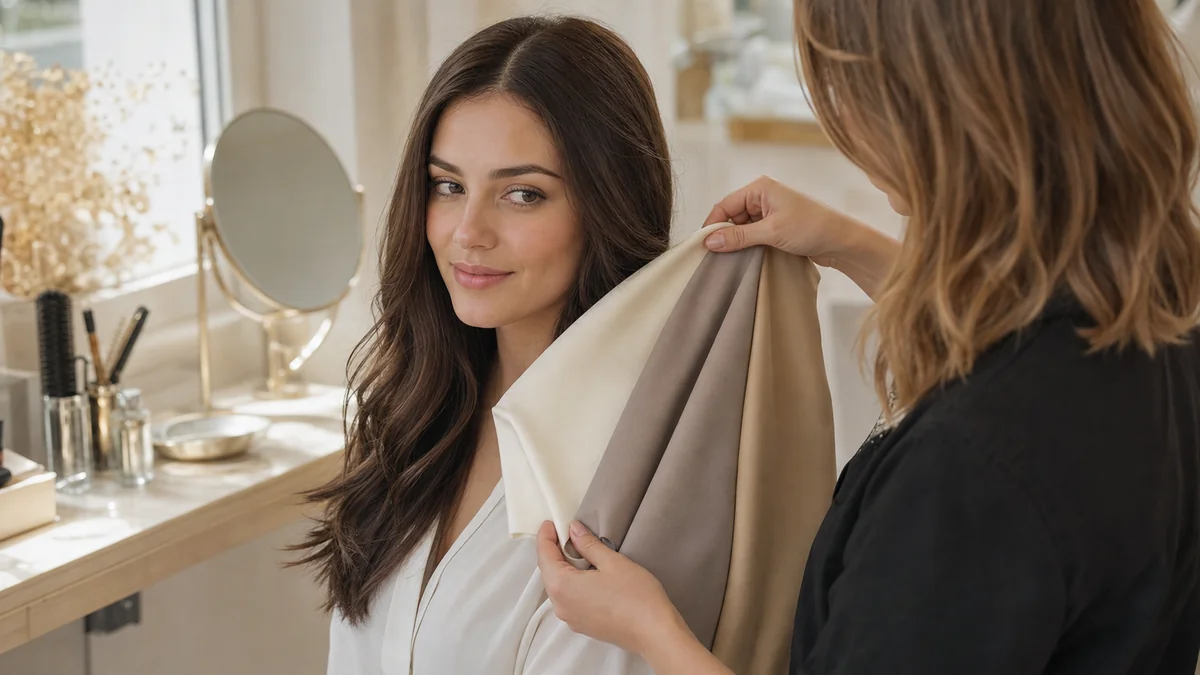
How to Use This Hair Color Chart
Use the chart as a filtering tool before you save salon references. Move through these five steps in order:
- Identify your undertone.
- Check your natural hair depth.
- Choose a warm, cool, or neutral color family.
- Compare maintenance requirements.
- Save two references and discuss them with your colorist.
The fifth step matters because color names are not standardized. A photo lets your colorist see whether you mean soft caramel, orange-gold copper, beige blonde, or smoky ash. A second reference showing what you do not want is just as useful.
Hair color chart by undertone
Warm undertones usually look more alive with golden, honey, copper, and auburn reflection. Cool undertones often look clearer with ash, smoky brunette, beige blonde, cool espresso, or violet-red shades. Neutral undertones have the most flexibility, but they still need balance; extreme yellow blonde or flat gray ash can overpower the face.
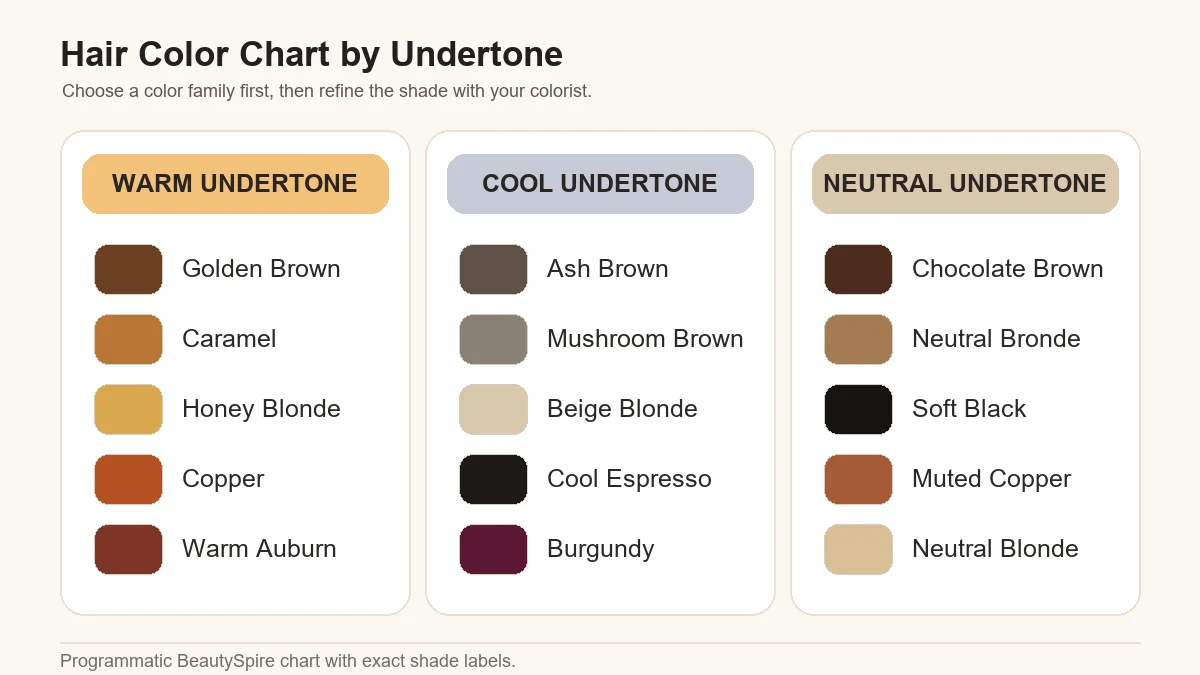
| Undertone | Best Hair Color Families | Use Caution With | Maintenance | Professional Look |
|---|---|---|---|---|
| Warm | Golden brown, caramel, honey blonde, copper, warm auburn | Blue-black, silver gray, very ashy blonde | Low to high depending on lightness | Rich, sunny, soft, healthy-looking |
| Cool | Ash brown, mushroom brown, beige blonde, cool espresso, burgundy | Orange copper, yellow blonde, very warm caramel | Medium to high because cool tones can fade warm | Polished, clean, modern, refined |
| Neutral | Chocolate brown, neutral bronde, soft black, muted copper, neutral blonde | Extreme ash or extreme orange if it overpowers the face | Low to medium when close to natural depth | Balanced, wearable, flexible |
For example, warm undertones may look fresher in honey brunette than ash brown because golden reflection works with the warmth in the skin. Cool undertones may prefer mushroom brown because the smoky reflect keeps orange tones from competing. If you are between two undertones, start with a neutral version such as beige brown, soft chocolate, or neutral bronde; it is easier to adjust later.
Best brunette shades on the chart
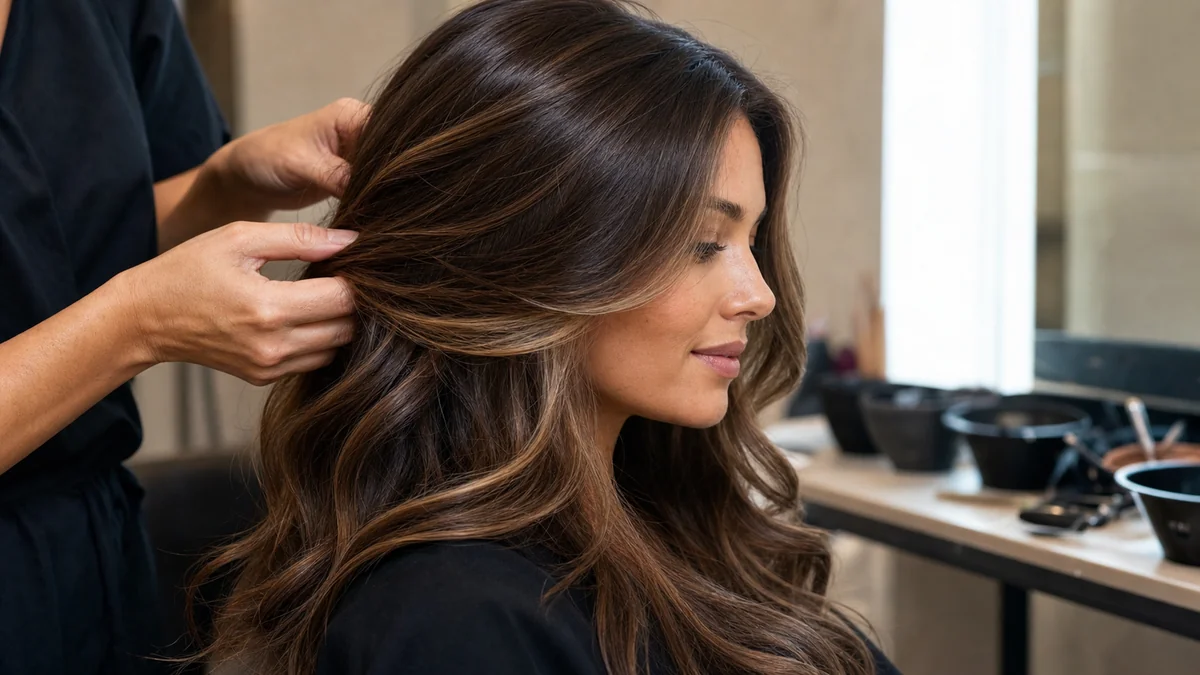
Brunette is the most flexible color family because it can be warm, cool, neutral, glossy, or dimensional without requiring a dramatic lift. Brown shades often stay closer to natural depth, so they tend to grow out more softly than blonde or vivid red.
Golden Brown
Golden brown adds warmth and brightness without going very light. It is especially helpful when medium brown hair feels dull but you do not want heavy highlights. It has soft grow-out and flattering shine, though it can look too yellow on very cool undertones.
Caramel
Caramel adds amber warmth around the face, which can soften dark hair and brighten warm or olive-warm skin. It photographs beautifully and works well with balayage. The tradeoff is brassiness: caramel needs color-safe care and occasional glossing if your hair lifts orange.
Mushroom Brown
Mushroom brown uses ash and taupe reflection to cool down brunette hair. It feels modern and refined on cool or neutral undertones, especially when natural brown hair turns orange in the sun. Because ash fades faster than warm brown, it may need more toning.
For brunette shades, ask whether you need gloss, lowlights, face-framing brightness, or all-over color. A dimensional brunette often looks more expensive than one flat shade.
Best blonde shades on the chart
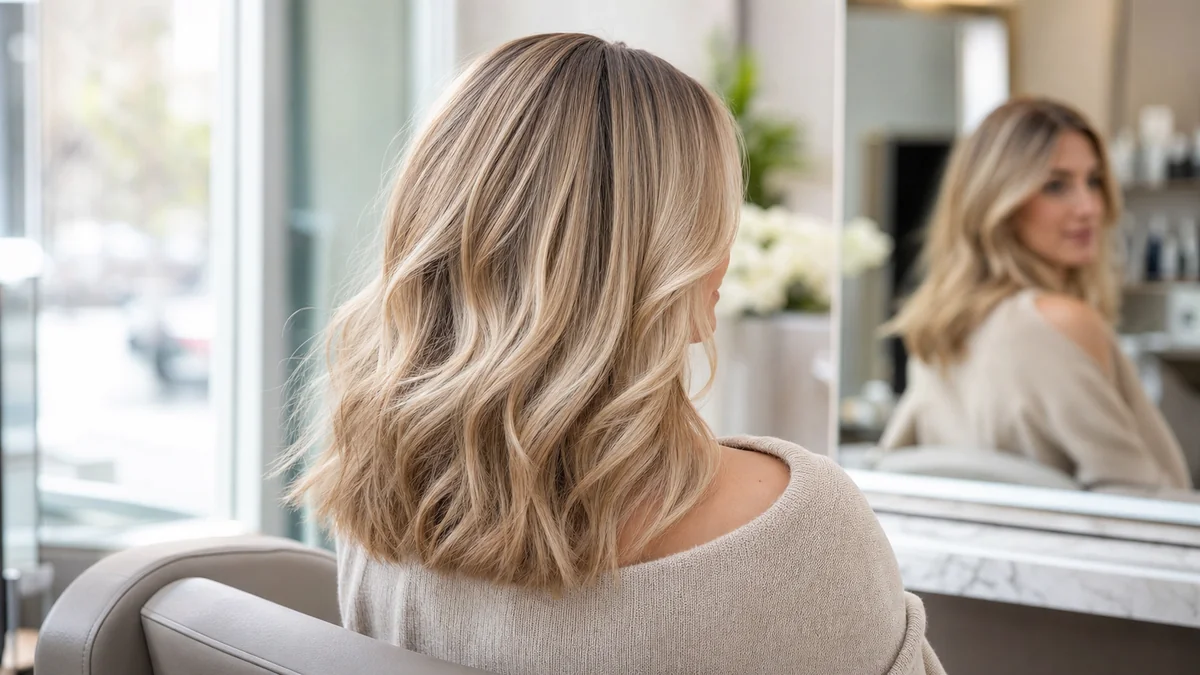
Blonde needs a little more planning because lightening exposes warmth. Honey and golden blondes usually flatter warm undertones, beige and neutral blondes are safer for balanced undertones, and ash or pearl blondes work best when the skin can handle cool reflection.
Honey Blonde
Honey blonde brings golden warmth without the harshness of pale yellow blonde. It can make warm skin look glowing, especially with gold jewelry or warm makeup. On cool pink undertones, however, honey can read too yellow.
Beige Blonde
Beige blonde sits between warm and cool, which makes it one of the most wearable blonde families. It looks soft and polished, but it can turn dull if over-toned. Choose beige when you want blonde without strong yellow or silver reflection.
Ash Blonde
Ash blonde cools down gold and orange. It can look sleek on cool undertones and help manage brassiness, but it is higher maintenance and can make warm skin look flat or gray. A healthy beige blonde is usually better than forcing icy blonde too quickly.
Best red, copper, and auburn shades
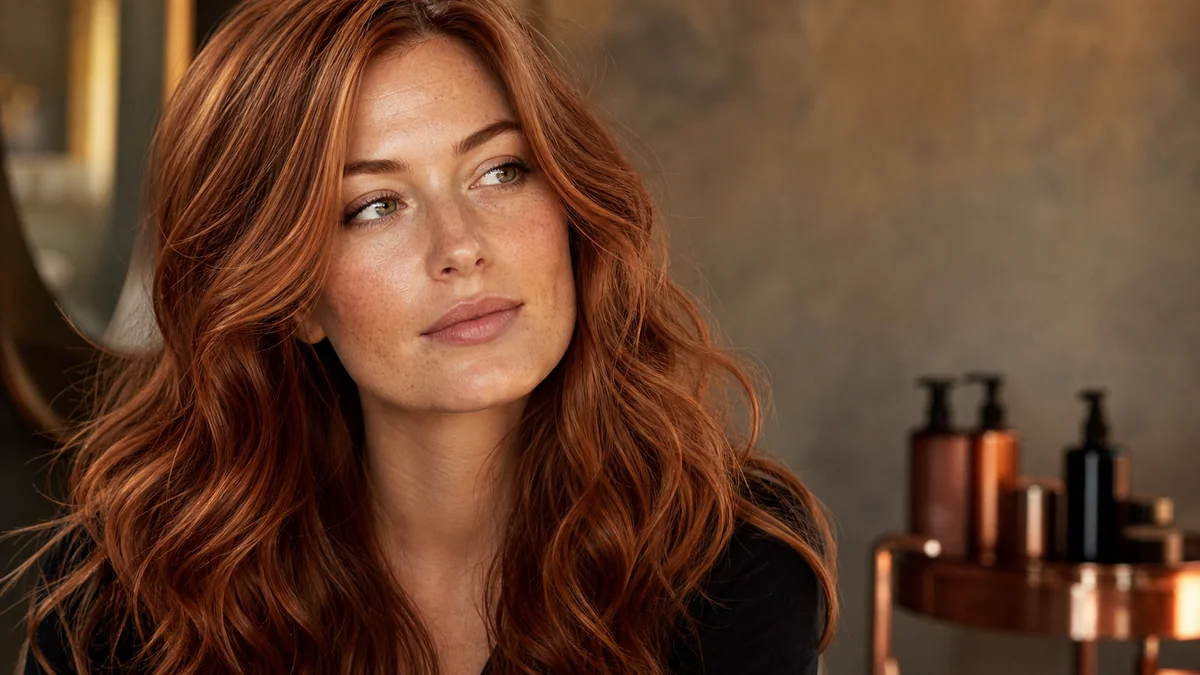
Copper and auburn change the whole mood of the face, so the undertone match matters more than usual. When red and copper work, they look vibrant and intentional. When they fight the skin, they can exaggerate redness, sallowness, or shadows.
Copper
Copper adds orange-gold warmth and can make warm skin look lively. It is eye-catching in natural light and especially flattering on golden skin or freckles. The downside is fading: copper needs color-safe products and regular refreshes.
Warm Auburn
Warm auburn blends brown and red, so it feels richer and more wearable than bright copper. It is a polished choice for warm or neutral brunettes who want a noticeable change without going vivid red.
Burgundy
Burgundy has a cooler violet-red base, which can suit cool or neutral undertones better than orange copper. It works on darker bases and looks dramatic, but it can stain, fade unevenly, and feel too intense for a low-maintenance routine.
If you are new to red, start with a gloss or subtle auburn dimension before committing to an all-over permanent color.
What colors should you avoid?
Avoid shades that make your skin look yellow, gray, red, or shadowed, even if the color is trending. Warm undertones should be careful with blue-black, silver gray, icy ash blonde, and very smoky brown, because those shades can make warm skin look sallow. Cool undertones should be careful with orange copper, yellow-gold blonde, and very warm caramel, because those shades can emphasize redness or unevenness.
Neutral undertones should avoid extremes first. Very yellow blonde or very flat ash can both overwhelm otherwise balanced coloring. If you love a shade that technically clashes with your undertone, ask for a softer version around the face. Placement can make a bold color more wearable.
Hair color comparison chart
The best shade is the one that matches your undertone and your maintenance tolerance. Use this table to compare the most common options before saving reference photos.
| Shade | Best For | Undertone Fit | Maintenance | Difficulty |
|---|---|---|---|---|
| Golden brown | Natural brightness | Warm, neutral | Low to medium | Easy |
| Caramel | Soft dimension | Warm, olive-warm | Medium | Medium |
| Mushroom brown | Cool brunette finish | Cool, neutral | Medium | Medium |
| Honey blonde | Warm blonde glow | Warm | Medium to high | Medium |
| Beige blonde | Balanced blonde | Neutral, soft cool | Medium to high | Medium |
| Ash blonde | Cool, smoky blonde | Cool | High | Advanced |
| Copper | Warm statement color | Warm | High | Advanced |
| Warm auburn | Rich brunette-red shift | Warm, neutral | Medium | Medium |
| Burgundy | Deep red-violet drama | Cool, neutral | High | Advanced |
Do not treat low maintenance and low difficulty as the same thing. A shade can be easy to style but still need frequent toning, glossing, or root upkeep.
Which hair color should you choose?
- If you want low maintenance: choose chocolate brown, soft golden brown, neutral brunette, or subtle caramel dimension close to your natural depth.
- If you want brightness around the face: choose honey highlights, caramel face-framing pieces, beige blonde ribbons, or soft copper lights depending on undertone.
- If you want a cooler, polished look: choose mushroom brown, cool espresso, beige blonde, or soft ash highlights.
- If you want a bold change: choose copper, warm auburn, burgundy, or a higher-contrast blonde, but plan for glossing and color-safe care.
- If you are unsure: choose a gloss, demi-permanent color, or subtle balayage before committing to all-over permanent color.
A warm brunette who wants brightness but dislikes frequent appointments may prefer caramel balayage over full honey blonde. A cool brunette who wants polish may prefer mushroom brown gloss over golden highlights. Bring your stylist your undertone result, current hair history, and maintenance limit; the right shade is often a customized version of the chart, not a copy-paste formula.
Common Mistakes
- Choosing a shade only because it is trending: Cowboy copper, icy blonde, or espresso brunette can be beautiful, but undertone and maintenance still matter.
- Ignoring your starting color: Going from dark box dye to pale blonde is not the same as refreshing natural dark blonde hair.
- Forgetting maintenance costs: Toning, glossing, root smudges, purple shampoo, and color-safe products are part of the real plan.
- Going too ashy to fight brass: Over-toning can make hair look flat, smoky, or dull instead of expensive.
- Choosing all-over color when placement would work better: Face-framing highlights, lowlights, or balayage can flatter with less commitment.
- Skipping a strand test for big changes: Hair history affects lift, tone, and final condition.
Related Guides
- Find your face shape, undertone, and best beauty colors
- Best hairstyles for oval faces
- Best hairstyles for diamond faces
- Best hairstyles for square faces
- Short haircuts for round faces
FAQ
What is the most flattering hair color?
The most flattering hair color is usually the shade that matches your undertone, stays close enough to your natural depth to feel balanced, and fits your maintenance routine.
How do I know if I need warm or cool hair color?
Look at whether gold, copper, and cream shades make your skin look healthy, or whether ash, silver, and blue-based shades look cleaner. If you are unsure, use the free BeautySpire analysis tool to check your undertone.
What hair colors make skin look brighter?
Warm skin often looks brighter with golden brown, caramel, honey blonde, or copper. Cool skin often looks brighter with ash brown, beige blonde, cool espresso, or soft burgundy.
What hair color is easiest to maintain?
Colors close to your natural depth are usually easiest: soft brunette, subtle caramel dimension, neutral brown gloss, or low-contrast balayage.
What hair colors are hardest to maintain?
Icy blonde, silver gray, vivid copper, burgundy, and high-contrast highlights usually need more toning, glossing, and root maintenance.
Can warm skin tones wear ash brown?
Yes, but a very flat ash brown can make warm skin look dull. A neutral brown with soft beige reflection is often more flattering than a strong blue-gray ash.
Can cool skin tones wear copper?
They can, but orange copper may emphasize redness. A softer auburn, rose brown, or cooler red-violet shade may be easier to wear.
Should I go lighter or darker with hair color?
Go lighter if you want brightness and dimension, but plan for more maintenance. Go darker if you want shine and depth, but avoid going so dark that it makes your features look harsh.