By Anna / Beauty Spire editorial · Last reviewed: 2026-10-17
TL;DR / Quick answer
Curtain bangs are a center-parted (or softly off-center) fringe that opens outward like a pair of curtains, usually landing somewhere between the brows and the cheekbones. Almost every face shape can wear them. What changes from face to face is where the shortest piece starts, where the longest piece ends, and how much volume sits at the sides. Round faces usually do best with longer, cheekbone-length curtains. Long faces benefit from a fuller, brow-skimming version. Heart shapes like a soft sweep that opens across the forehead, and square jaws like feathered ends that land above the jaw corners. If you are not sure which group you fall into, start with the free Face Shape Analyzer. It runs locally in your browser, so your photo isn’t uploaded for the core check.

Curtain bangs keep coming back on Pinterest boards and in hair forums for one simple reason: they are the lowest-commitment fringe there is. They grow out into face-framing layers instead of an awkward half-bang, they work with a ponytail, and they can be pinned back on a bad-hair day. The catch is that a screenshot of someone else’s curtain bangs tells you very little about how the same cut will sit on your face. This guide breaks it down by face shape, then covers what to tell your stylist and how to style and trim them between appointments.
What curtain bangs actually are
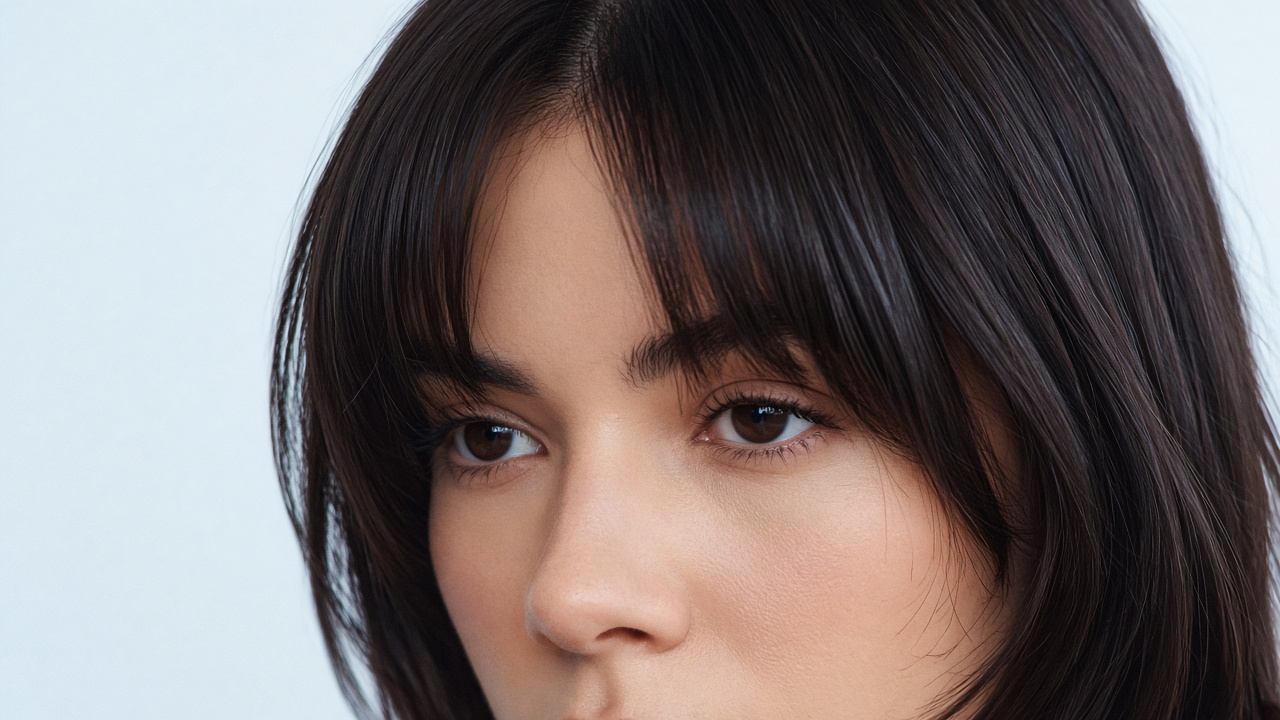
In salon terms, curtain bangs have three defining features:
- A part in the middle (or close to it). The fringe splits and falls to both sides rather than lying flat across the forehead.
- A graduated length. The shortest point sits at the center, often around the brows or the bridge of the nose, and the pieces get longer toward the temples until they blend into the first face-framing layer.
- Soft, broken-up ends. Point-cutting or slide-cutting keeps the edge feathery, so the bangs swing open instead of forming a hard line.
Unstyled and fresh from a cut, longer curtain bangs often fall forward over the face, as in the photo above. A quick round-brush or velcro-roller pass is what sends them outward. That is normal. It does not mean the cut is wrong.
Curtain bangs are different from blunt bangs (a straight, heavy line across the forehead), wispy bangs (a thin, see-through full fringe), and side-swept bangs (one long diagonal piece from a deep side part). Bringing the word “curtain” plus a photo to your appointment saves a lot of guesswork.
Curtain bangs by face shape
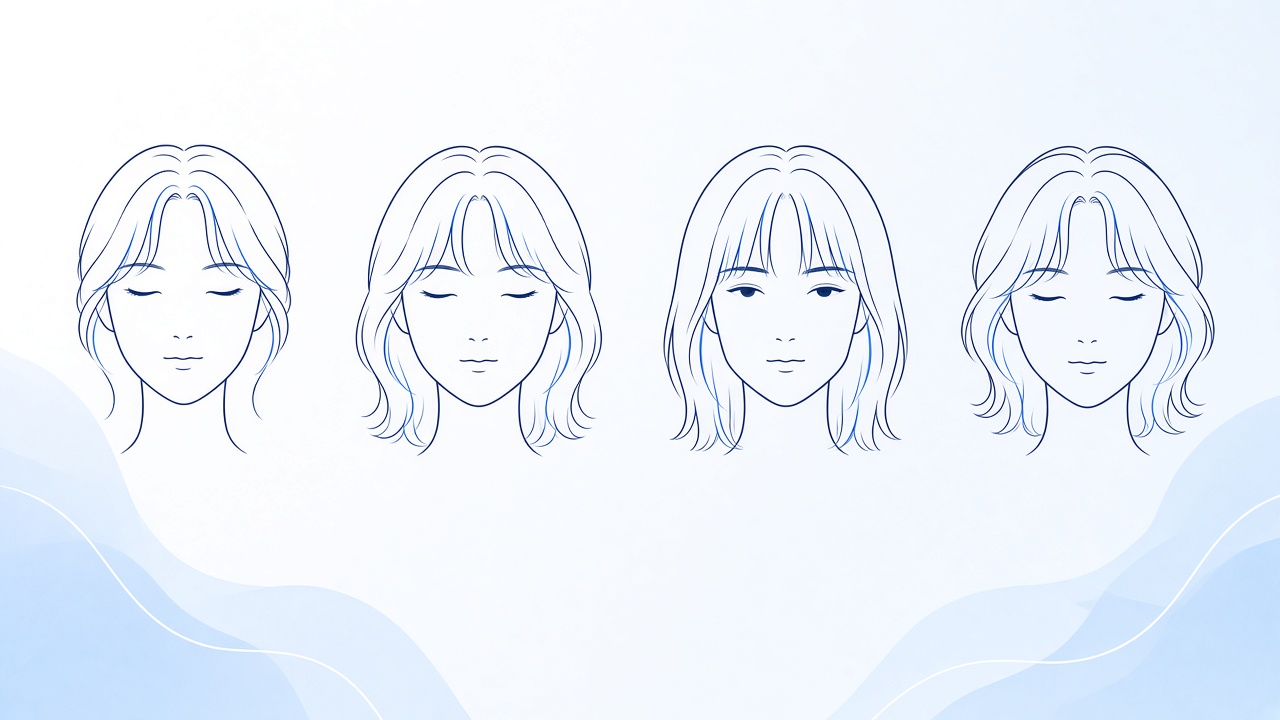
Use the table as a starting conversation with your stylist, not a rulebook. Hair density, cowlicks, and how much time you are willing to spend styling matter just as much.
| Face shape | Curtain bang version to ask for | Why it tends to work |
|---|---|---|
| Round | Longer curtains that start around the nose and end at or just below the cheekbones; keep volume off the widest point of the cheeks | The open center and longer sides draw the eye vertically and create soft angles |
| Oval | Classic brow-to-cheekbone curtains; almost any length works | Balanced proportions leave room to choose by lifestyle and texture |
| Long / rectangle | Fuller, slightly shorter curtains that skim the brows, with gentle width at the temples | Covering part of the forehead shortens the visual length of the face |
| Heart | Soft curtains that open across the forehead and end around the cheekbones; avoid extra volume at the temples | Softens a wider forehead while keeping attention near the eyes and cheekbones |
| Square | Feathered curtains with rounded, broken-up ends landing between cheekbone and jaw corner | Curved lines soften a strong jaw without hiding it |
| Diamond | Curtains that are a little fuller near the brows and taper off at the cheekbones | Adds width at the forehead to balance prominent cheekbones |
For deeper cut ideas by shape, see our guides to hairstyles for round faces, hairstyles for long faces, hairstyles for heart-shaped faces, hairstyles for square faces, hairstyles for oval faces, and hairstyles for diamond faces. Not sure of your shape yet? Read how to determine your face shape or try the Face Shape Analyzer.
Texture matters as much as face shape
- Fine, straight hair: keep the bangs slightly fuller so they don’t separate into strands by lunchtime.
- Thick hair: ask for internal thinning or longer curtains so the fringe doesn’t puff into a helmet shape.
- Wavy and curly hair: curtain bangs should be cut longer than you want them to look, ideally dry or on your natural pattern, because curls shrink. A stylist experienced with curly cuts is worth the booking.
- Strong cowlick at the hairline: curtain bangs are often the friendliest fringe for cowlicks, because the center part works with the lift instead of fighting it.
What to tell your stylist
Bring two or three photos of curtain bangs on someone with a similar hair texture, then cover these points:
- Where the shortest piece should land (brows, bridge of the nose, or tip of the nose)
- Where the longest piece should blend (cheekbones, mouth, or jaw)
- Whether you plan to wear them styled daily or want them to air-dry acceptably
- How often you can come back for a fringe trim (many salons offer quick bang trims between full cuts; ask about yours)
- Your usual part and any cowlicks you already know about
A useful safety line: “Please start longer than the photo. I’d rather go shorter at a second pass.” Curtain bangs are easy to shorten and slow to grow back.
How to style curtain bangs in five minutes
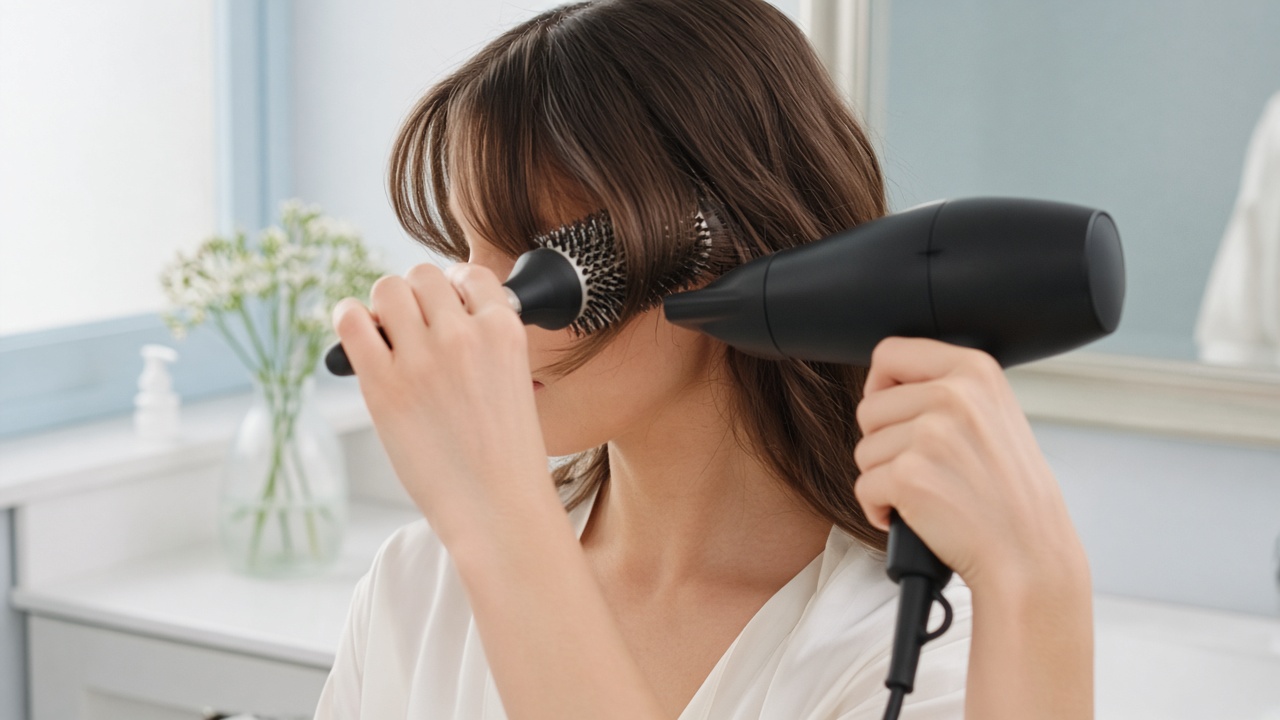
- Start with damp bangs. Even if the rest of your hair is dry, re-wet just the fringe with a spray bottle so you can reset yesterday’s shape.
- Apply a light heat protectant. A small amount is enough; heavy products make bangs greasy fast.
- Dry the roots first. Blow-dry the fringe side to side across the forehead, then down, to flatten any cowlick at the base.
- Round-brush outward. Split the bangs at the part, wrap each side around a small or medium round brush, and dry while rolling up and away from your face.
- Set and release. Hit each side with a cool shot, or pop in a velcro roller for a few minutes while you do your makeup, then let go and finger-shape.
No blow dryer? Twist each damp side away from your face, clip it flat with a duckbill clip, and let it dry. The result is softer but still opens the curtains.
Upkeep and trims between appointments
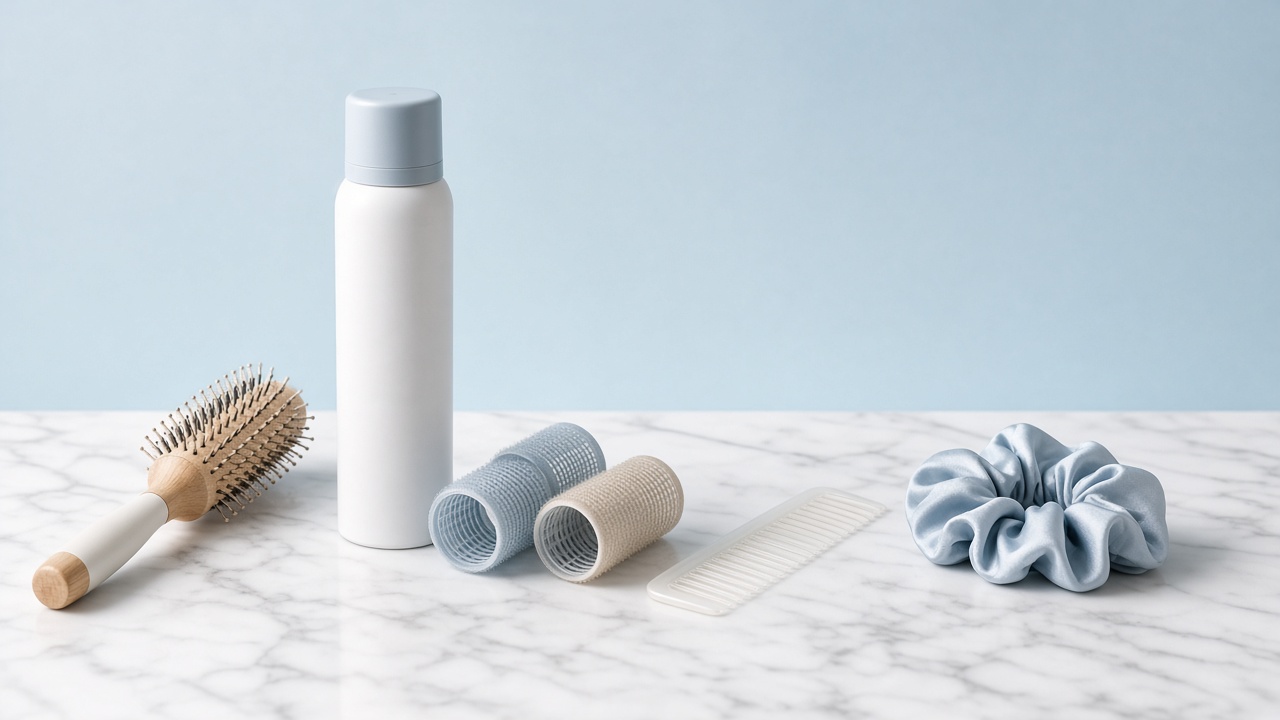
- Expect a fringe trim every 4 to 6 weeks if you want to keep the original shape. If you’re happy to let them grow into face-framing layers, you can stretch it much longer.
- Bangs get oily first. A small amount of dry shampoo at the roots of the fringe, or rinsing just the bangs in the sink, buys you an extra day between full washes.
- Keep skincare off them. Clip bangs back while applying moisturizer, SPF, or foundation so they don’t pick up oil.
- Trimming at home is risky. If you do it anyway, use sharp hair shears (not kitchen scissors), cut dry, cut vertically into the ends instead of straight across, and take off less than you think.
Coloring your hair too? Fringe pieces sit closest to your face and fade quickly from heat styling, so see our hair color maintenance guide for ways to keep them from going brassy.
Quick FAQ
Do curtain bangs suit round faces?
Yes, usually. Ask for a longer version that ends at or below the cheekbones, and keep the volume off the fullest part of the cheeks. Very short, wide curtain bangs can make a round face look wider.
Can I get curtain bangs with curly hair?
Yes. Ask for them cut longer and ideally on dry, natural curls, since curls shrink. Curly curtain bangs tend to look best when they’re styled with your natural pattern rather than blown straight.
How long do curtain bangs take to grow out?
It depends on how short they started and how fast your hair grows, but curtain bangs are the easiest fringe to grow out because they turn into face-framing layers along the way. A stylist can blend them as they grow.
Are curtain bangs high maintenance?
They’re lower maintenance than blunt bangs, but most people still need a quick daily style and regular fringe trims to keep the shape.
How do I know my face shape?
Measure forehead, cheekbones, jaw, and face length, or use our free Face Shape Analyzer, which runs locally so your photo isn’t uploaded for the core check. Our face shape guide explains each shape in more detail.
Key takeaways
- Curtain bangs are a center-parted, graduated fringe that opens outward, and nearly every face shape can wear a version of them.
- Length is the main lever. Longer curtains suit round faces, fuller brow-skimming curtains suit long faces, and soft feathered ends suit heart and square shapes.
- Hair texture and cowlicks matter as much as face shape, so bring photos of someone with hair like yours.
- Start longer, style with a round brush or velcro roller, and plan for fringe trims every 4 to 6 weeks.
Related on Beauty Spire: Face Shape Analyzer, face shape guide, how to determine your face shape, and oval vs round face.
Disclaimer: General beauty and hair-care information only, not medical advice. Results vary with hair type, density, and growth patterns; a licensed stylist can assess what will work for you.
Affiliate disclosure: If this page ever includes affiliate links, they will be disclosed. This article does not promote specific brands or invent product URLs. Sitewide affiliate disclosure also appears in the footer where applicable.